
Subtasks
תוכן זה אינו זמין עדיין בשפה שלך.
A task can have subtasks, the same subtasks you see in the Google Tasks app. They are indented under their parent task.
Add a subtask
Section titled “Add a subtask”There are three ways to add a subtask to a task:
- Open the task and click the “Add subtask” button (the last one in the row).
- Or open the three dots menu (⋮) of the task and click “Add a subtask”.
- Or, while editing the task, press Cmd+Alt+Enter (Ctrl+Alt+Enter on Windows).
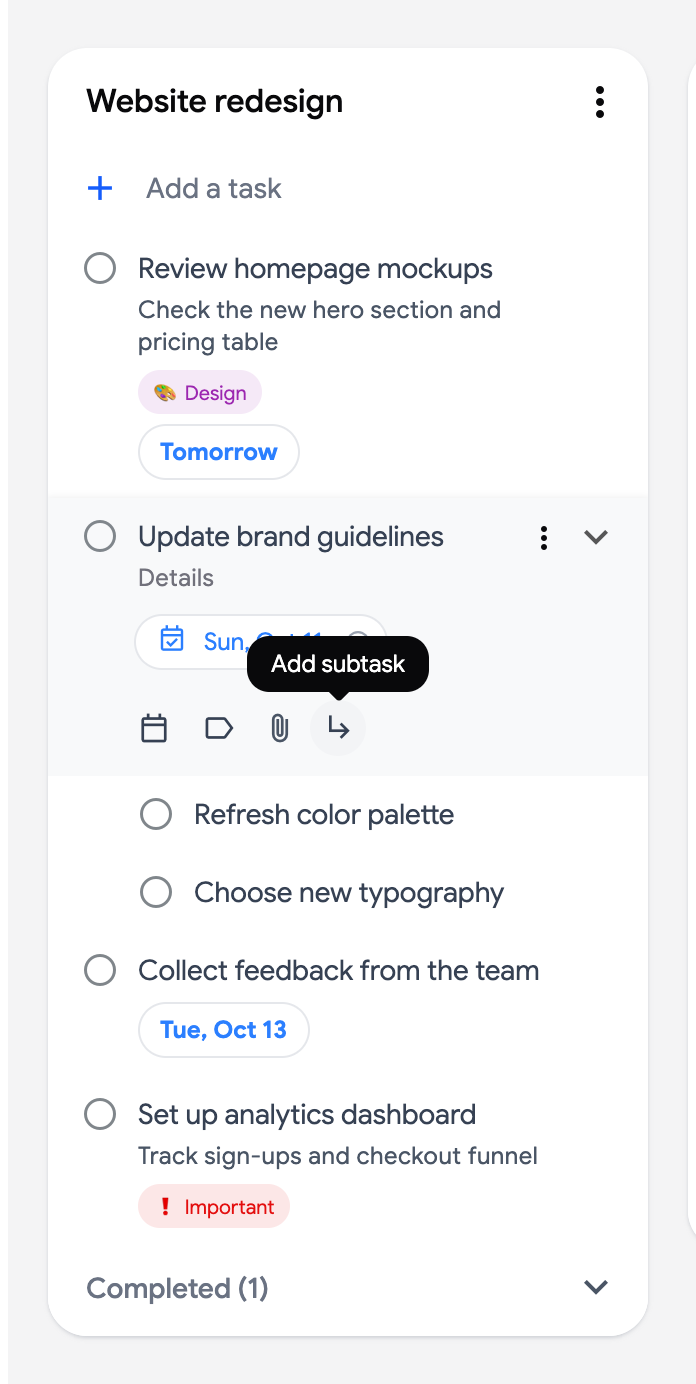
A new subtask opens right under the parent, ready for its title. Pressing Enter in the title of a task that already has subtasks also adds a new first subtask.
Turn an existing task into a subtask
Section titled “Turn an existing task into a subtask”- Place the task right below the task that should become its parent.
- Open its three dots menu (⋮) and click “Set as subtask of …” (the name of the task above is shown).
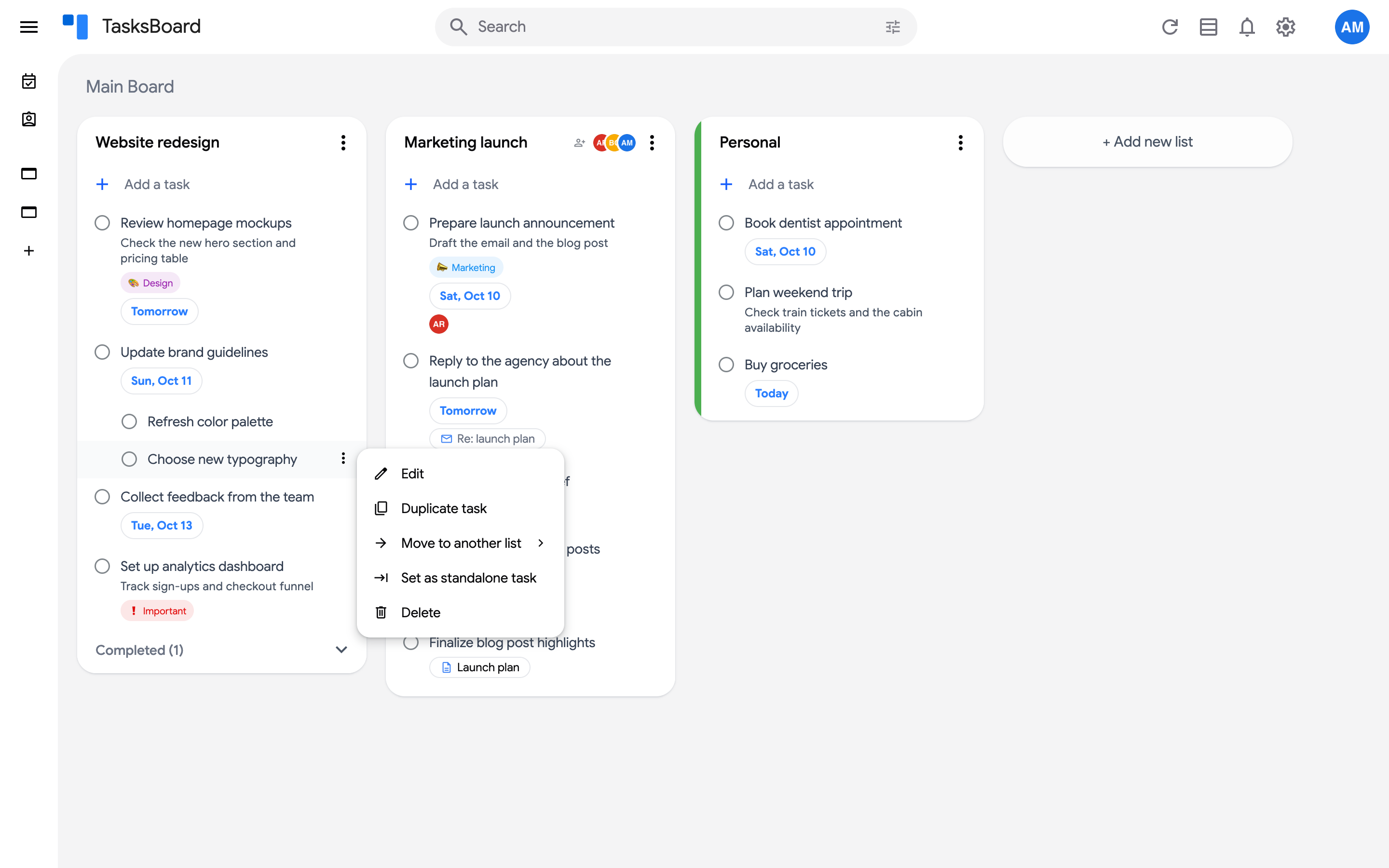
To do the opposite, open the menu of a subtask and click “Set as standalone task”:
Collapse and expand
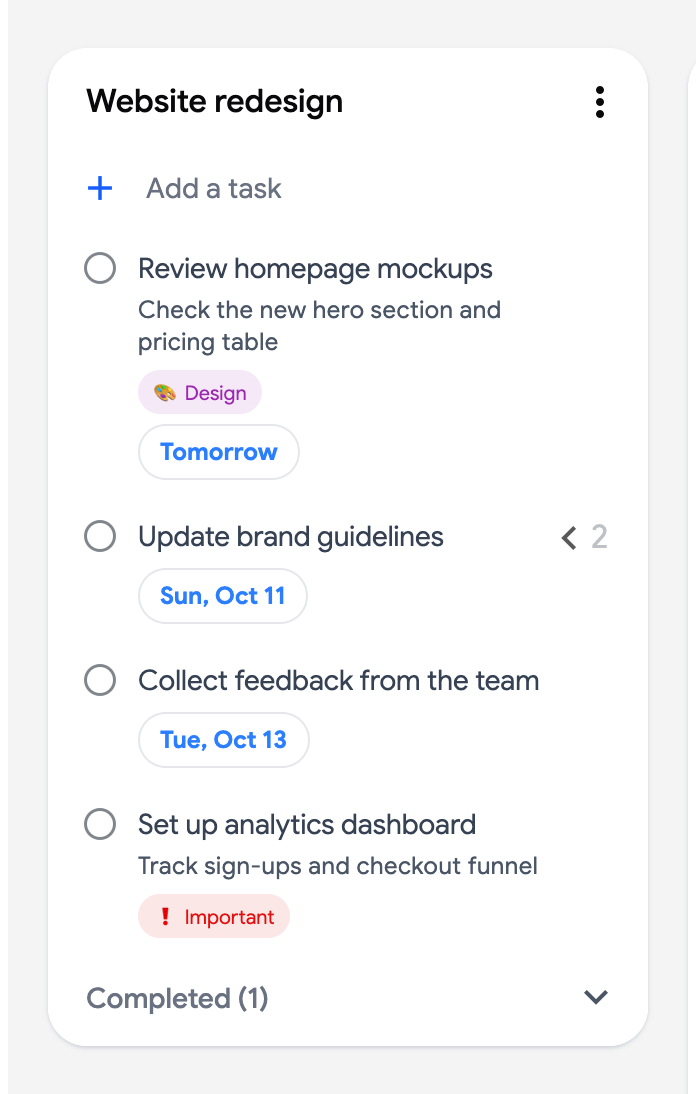
Section titled “Collapse and expand”Click the arrow at the right of a parent task to hide its subtasks. The number of hidden subtasks is shown next to the arrow; click it again to expand.
Good to know
Section titled “Good to know”- Subtasks move with their parent: when you drag a parent task or move it to another list, its subtasks follow.
- Completing the parent task completes its subtasks.
- Google Tasks allows one level of subtasks only, so a subtask cannot have subtasks of its own.
- When a list is sorted by due date, tasks are grouped by date and the subtask options are not available; switch back to “My order” to manage subtasks.